If You Lived Here--Seongsan (성산)
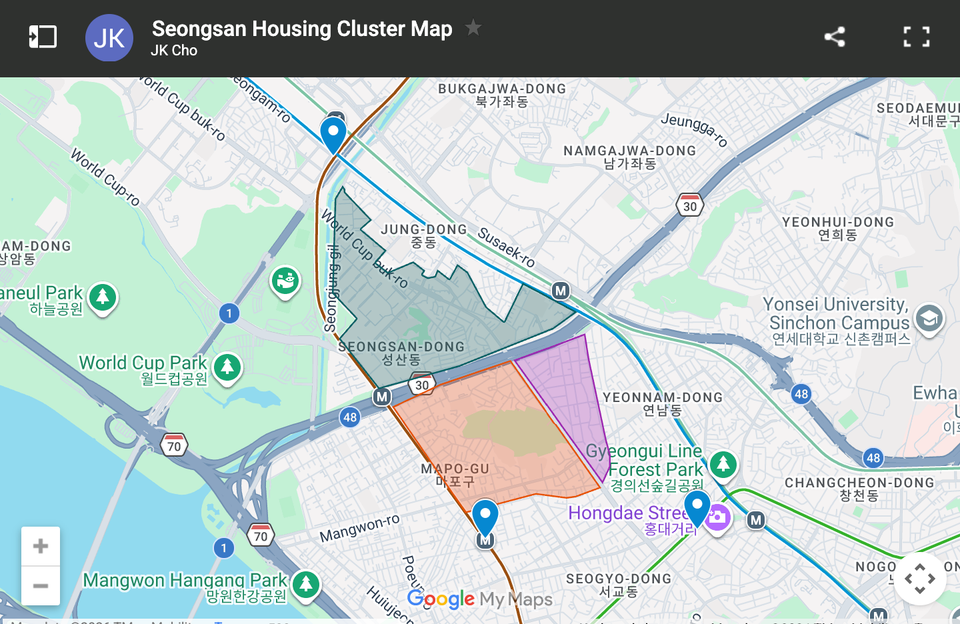
The absolute numbers show Seongsan is enormous.
25,254 households.
47,185 population.
214 estimated rental doors.
269 products.
571 listings.
147 advertising offices.
It's the biggest residential ecosystem of the six by a mile.
But relative to that huge resident base:
Doors/households: only 0.85%, lowest in the orbit.
There are lots of observable doors because Seongsan itself is huge, not because rental inventory is especially abundant relative to the neighborhood.
Now, economically:
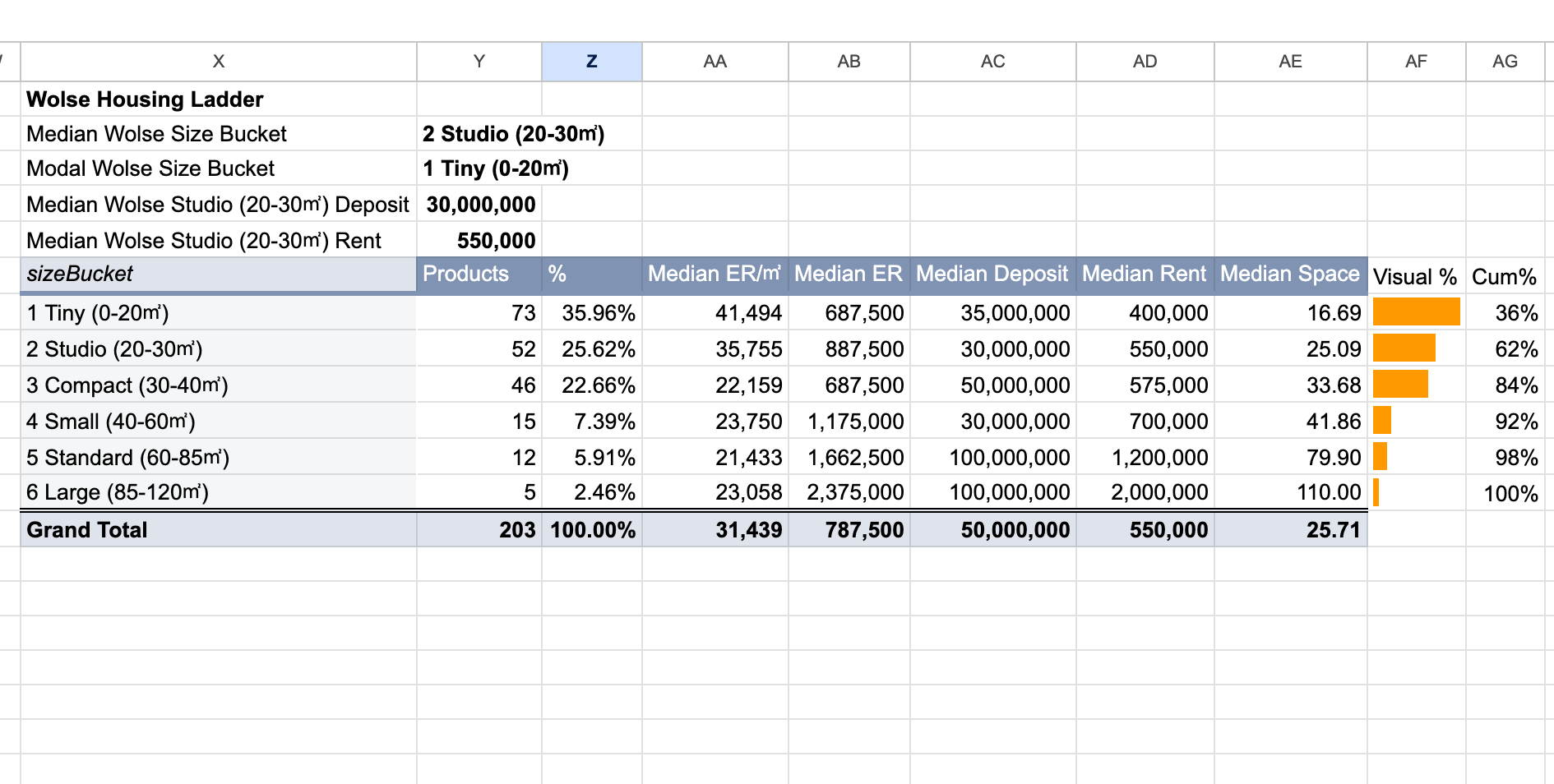
- Median unit size (all lease types): 28㎡, smallest of my Hongdae set
- Modal and median Wolse unit size bucket: Tiny (0-20㎡)
- Median Wolse ER: ₩787,500, second cheapest
- Modal Wolse rent band: ₩0-500k, cheapest
Seongsan is the affordable side of Hongdae.
Yeonnam says:
Spend more, get more home.
Seongsan says:
You can keep the total commitment lower by taking less home.
And then the market-interface statistics go crazy:
2.12 listing inflation.
2.67 listings/door.
147 offices advertising.
39.58% Top-5 listing share.
I dug deeper.
Much of this seems to come from a few offices multiplying a surprisingly small number of doors--in the southeast pocket--into enormous numbers of listings.
One office alone:
5 estimated doors.
6 products.
121 listings.
Yeah.
And even the low 8% fresh-listing rate now matters.
Hapjeong is 32%. Seongsan is 8%.
That makes Seongsan look less like a rapidly turning market and more like an inventory surface repeatedly occupied by existing advertisements.
Seongsan has a lot of housing, but not necessarily a lot of housing looking for you.
And it looks busier online than it may feel on the ground.