If You Lived Here--Yeonnam (연남)
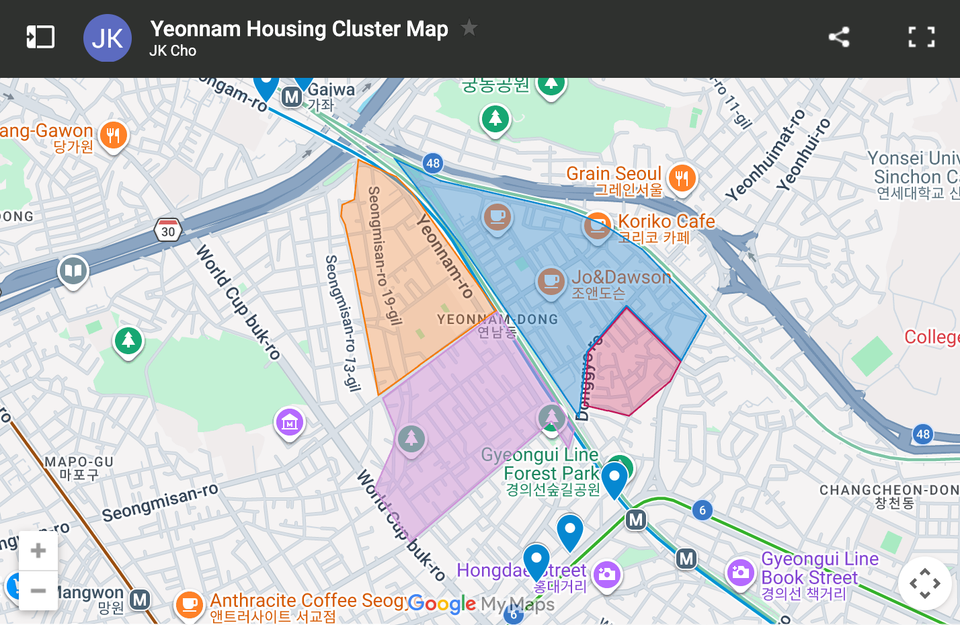
Yeonnam surprised me.
It's tiny geographically: 0.64 km². Yet:
- 8,216 households
- 14,630 population
- 12,838 households/km², highest in the Hongdae orbit
- 6.30% foreigner ratio, second only to Seogyo
It has by far the highest housing density--a genuinely compressed urban habitat.
But its housing does something unexpected:
- Median space (all lease types): 33㎡, joint largest
- Median and modal size band for wolse bucket: 30–40㎡ (Compact)
Along with Mangwon, that's the largest median housing in my Hongdae set.
Then here is something:
- Median wolse ER/㎡: ₩28,125, lowest of the orbit
- But the median wolse ER: 875,000, 2nd highest of the orbit
That's fascinating.
Wolse space is relatively cheap here, but the typical total housing cost isn't.
And look at the median / modal Wolse size bucket for Hongdae:
- Yeonnam : 30–40㎡ / 30–40㎡
- Mangwon: 0–20㎡ / 0–20㎡
- Hapjeong: 0–20㎡ / 0–20㎡
- Seogyo: 20–30㎡ / 20–30㎡
- Seongsan: 0–20㎡ / 0–20㎡
- Seogang: 0–20㎡ / 0–20㎡
Yeonnam is the only one whose Wolse market centers on 30–40㎡.
So, this:
Yeonnam feels pricy, but comes with space.
Seogyo and Yeonnam are both where Hongdae's "create and play" people gather.
And their median Wolse ERs rank #1 and #2 in my six hoods.
But there's a clear difference:
Yeonnam seems more willing to ask you to carry that housing cost as deposit rather than monthly rent.
Especially at the same 20–30㎡ size, it has the highest deposit and lowest monthly rent of the six hoods.
Deposit is doing lots of work here.
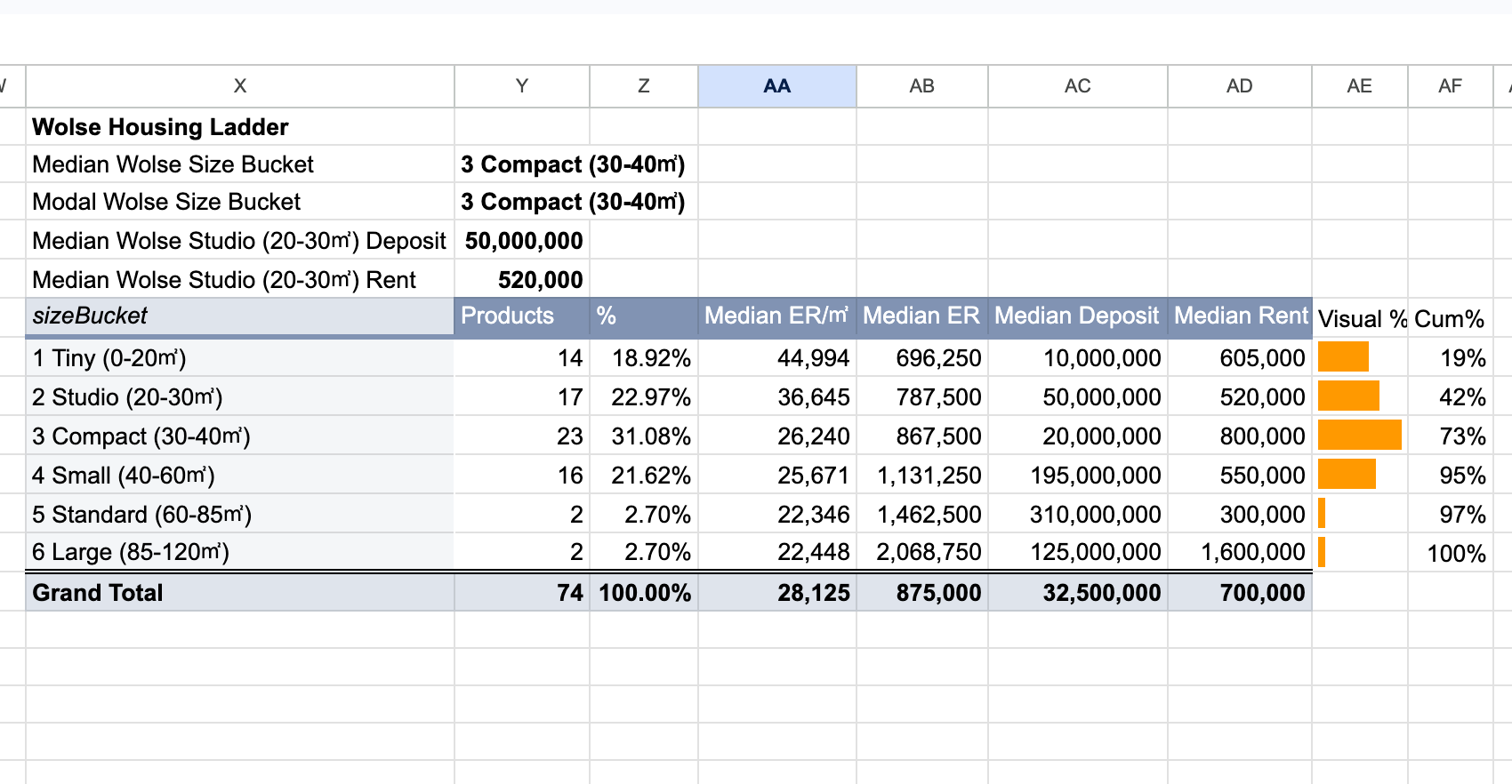
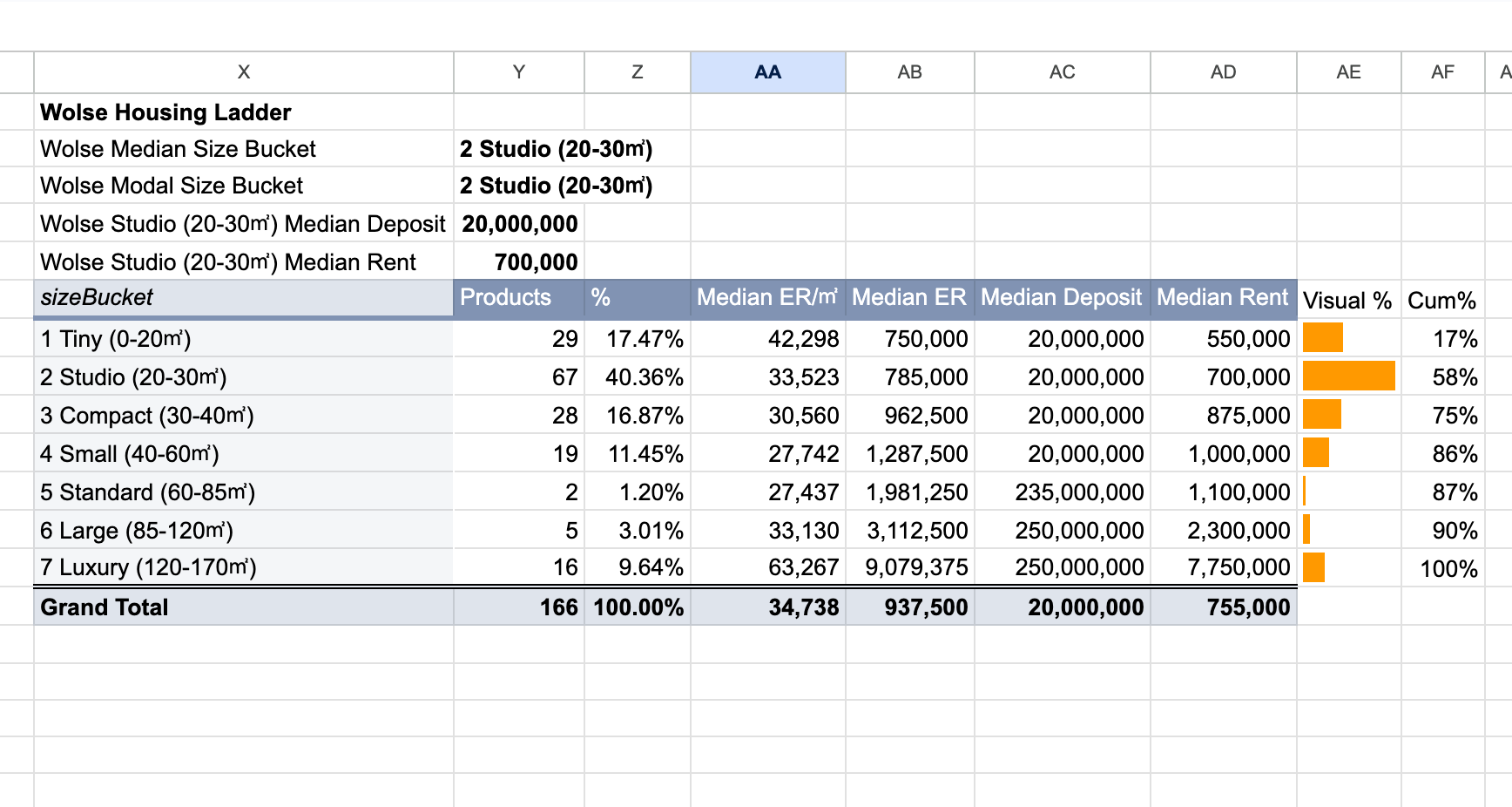
Naver listing snapshot comparison between Yeonnam (left) and Seogyo--August 2026.
Budongsan behavior is relatively normal:
- packaging 1.19, low
- listings/door 1.70, basically orbit median
- 20% fresh listings
- 10-day median listing age
- moderate office concentration
Normal play.
So there are really two things happening simultaneously in Yeonnam.
Space efficiency: excellent.
Upfront commitment: heavier.