If You Lived Here--Itaewon (이태원)
The median home is 57㎡.
The median building age is 32 years old.
The median wolse deposit is ₩30M.
Median wolse rent is ₩2.5M.
I can keep laying out these middles.
But they don't describe Itaewon particularly well.
Because around those middles, there are many:
다가구 rooms, villas, officetels, apartments, and townhouses.
Very small places and very large ones.
Old buildings and newer ones.
Cheap-ish housing and seriously expensive housing.
Itaewon has a broad housing silhouette.
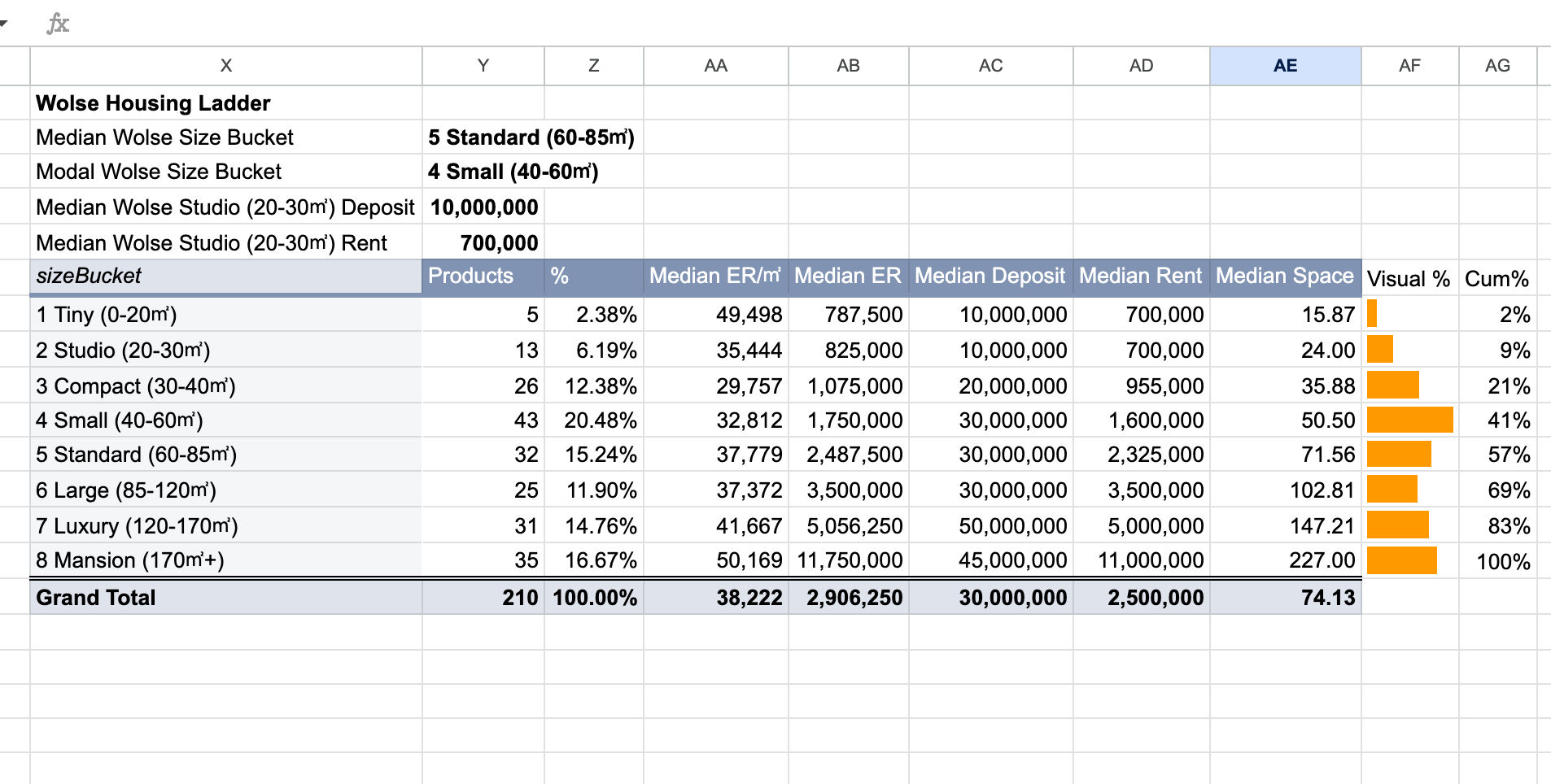
But there is one pattern that does come through pretty clearly.
This is a pretty accessible market for wolse participation.
72% of the observable market is wolse.
The median wolse deposit is ₩30M, and 63% of wolse products ask for less than ₩50M upfront.
So while the housing itself spreads in many directions, you don't necessarily need Ichon-level capital to start searching across it.
Instead, you carry more of the housing cost monthly.
There's also quite a bit to search through.
233 observable doors across 7,922 households gives Itaewon the second-highest door-to-household ratio in my Yongsan set, after Hannam.
Those doors expand into 293 products and 416 listings.
Median listing age is 11 days, and 25% of listings are fresh within three days, second highest.
Meanwhile, the top 5 active budongsan offices hold only 16.59% of listings, and the top 10 only 28.85%--the most decentralized office network in my Yongsan set.
So the bottleneck here may not be finding the one you want.
It may be figuring out what it is you want.
That's a different kind of search problem.
If I were searching Itaewon, I'd give myself some room.
I'd choose a few pockets, walk them, see homes, and talk to several local offices.
Maybe the villa feels better than expected.
Maybe the bigger old place is worth the hill.
Maybe one street makes much more sense than the one next to it.
I'd build the buybox through physical calibration--then search deeper.
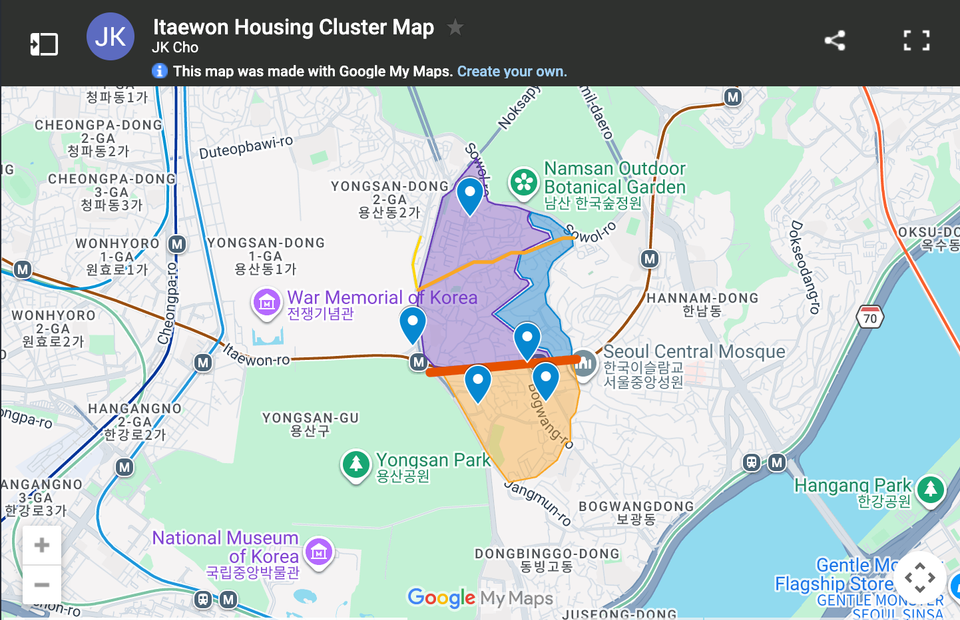
Itaewon doesn't divide neatly into housing grounds--take these polygons as directions, not boundaries.