3 min read

If You Lived Here--Yeonhui (연희)
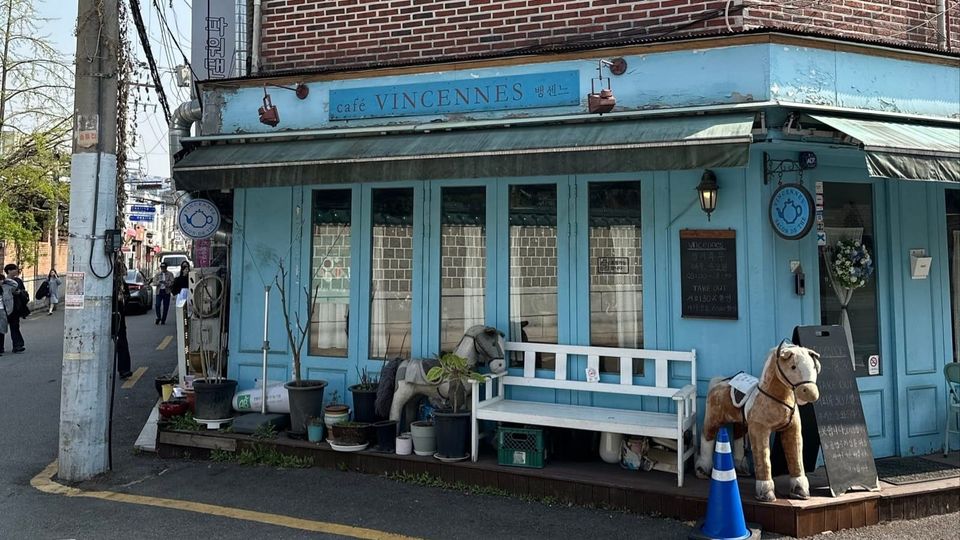
A quieter pocket above Yeonnam--with more space, more variation, and a slower rhythm, where settling starts to feel possible.
If You Lived Here--Yeonhui (연희)
You don’t land here by accident.

Hey cuz,

You don’t land in Yeonhui by accident.

You pass through Yeonnam.
You feel Hongdae pulling you.
But if you cross Sungsan-ro and keep going, something changes.

The noise drops.
The streets open.
And Seoul… softens.

It starts to feel less like an urban neighborhood and more like somewhere you can settle.


Yeonhui at a glance

Vibe
Quiet, residential, slightly academic.
Calm without being empty.
A protected, nest-like feeling.

Position
Right above Yeonnam.
Wrapped by mountain, stream, and campus.
No subway lines run through it.
Not a pass-through, more like a contained basin.

Typical Housing
Low-rise mini apartments ("villas"), multi-unit homes (다가구), and detached houses.
Very few full apartment complexes.
More living space per person than average of Seoul.

Residents
Students, returnee couples, quiet families.
Professors and researchers mixed in.

Price Feel (2025–2026)
Entry starts around ₩10M,
but it doesn’t really settle until ₩20M–30M.
From there, it spreads depending on building type and pocket.


Housing cluster map

Yeonhui organizes itself around a few lines.

Closer to the strips, things move.
Foot traffic builds.
Units turn over faster.

Step away, and it settles.
That’s where the basin sits.

The strips

There are three main lines shaping the neighborhood:

Yeonhui-ro (Through Traffic / Spine)
The main road cutting across the top.
Cars pass through.
Shops line parts of it, but it doesn’t hold you there.

Yeonhuimat-ro (Lifestyle Strip)
Where cafes, restaurants, and small shops cluster.
This is where Yeonhui shows itself outward.

Yonsei Connector (Student Spillover)
Running down toward Yonsei and Sinchon.
More turnover.
More short-cycle rentals.

The housing clusters

Between and beyond those lines, the neighborhood forms into pockets.

Yeonnam Edge (Spillover Zone)
Closest to Yeonnam and the park.
Energy leaks in.
Units move faster.
Layouts can feel more adapted.

Yonsei Side (Student Side)
Along the connector toward Yonsei.
Higher turnover.
More studios and smaller units.
More variation in condition.

Gu-Office Pocket (Civic Pocket)
Near the district office.
A bit more structured.
Slightly quieter and older.

Gungdong Side (Outer Residential)
Along the slope toward the mountain, the pressure drops.
West side leans older and smaller.
Some pockets already moving into redevelopment.
Further south, buildings feel more stable.

The center isn’t marked.
A lot of the housing here is legacy stock.
It wasn’t built to turn.
If you land there, you usually stay longer.


Rental Snapshot (Spring 2026)

Most of Yeonhui leans on villas and detached homes.

When you line up the listings, the market doesn’t compress.
It spreads, then separates.

The numbers repeat. The units don’t.

Entry Tier--Studios / 1.5 Room (15–30㎡)

₩10–20M deposit / ₩600k–900k rent
You’ll see clear bands at ₩10M and ₩20M.
Plenty of listings--mostly older villas and converted homes.
Similar sizes, different feel.
This is where the market starts, but not where it settles.

Mid Tier--Large Studios / 1BR (25–50㎡)

₩20–50M deposit / ₩800k–1.3M rent
This is the center of gravity.
Layouts open up. Light and spacing improve.
Most “this could work” moments happen here.
Pricing doesn’t align neatly.
Two similar units can sit far apart depending on building type.

Upper Tier--1BR / 2BR+ (40–80㎡+)

₩40M–100M+ deposit / ₩1.1M–1.8M+ rent
The market opens up here.
You’ll see townhouse-style larger villas (연립주택) with multiple rooms.
But consistency drops.
Some units feel like upgrades.
Others feel like completely different categories.

High-End Layer--Detached Houses / Premium Villas (80㎡+)

₩100M → ₩500M+ deposit / varied rent
This is a separate market sitting on top.
Detached homes, legacy properties, larger footprints.
Fewer listings, wider negotiation range.
This isn’t just bigger rent.
It’s a different housing layer.


Friction Points

A few things to keep in mind:

Inventory depth
Yeonhui carries more listings than nearby Mapo areas.
You’re not chasing 2–3 units.
You’re sorting through dozens.
Less pressure. More filtering.

Transportation gap
No direct subway inside.
You’ll rely on buses and walking outward.


Cousin’s Take

Yeonhui doesn’t sell itself.

And that’s the point.

If you want energy, compression, fast decisions, you’ll stop earlier--Yeonnam, Hongdae.

But if you want space that breathes, a slower daily rhythm, a place that doesn’t rush you, Yeonhui starts to fit.

The question here isn’t “Can I find a place?”
It’s “Which one actually fits?”

Once it clicks,
it doesn’t feel like you found a neighborhood.

It feels like you settled into it.

A little tucked in.
A little protected.

Like a nest.

Stay steady,
--JK