The Three Irreversible Money Moments in a Korean Lease
Cuz,
I signed my own lease this week for our new family home.
And wired the jeonse deposit downpayment (전세계약금).
Once that money left my account, there was no walking it back clean.
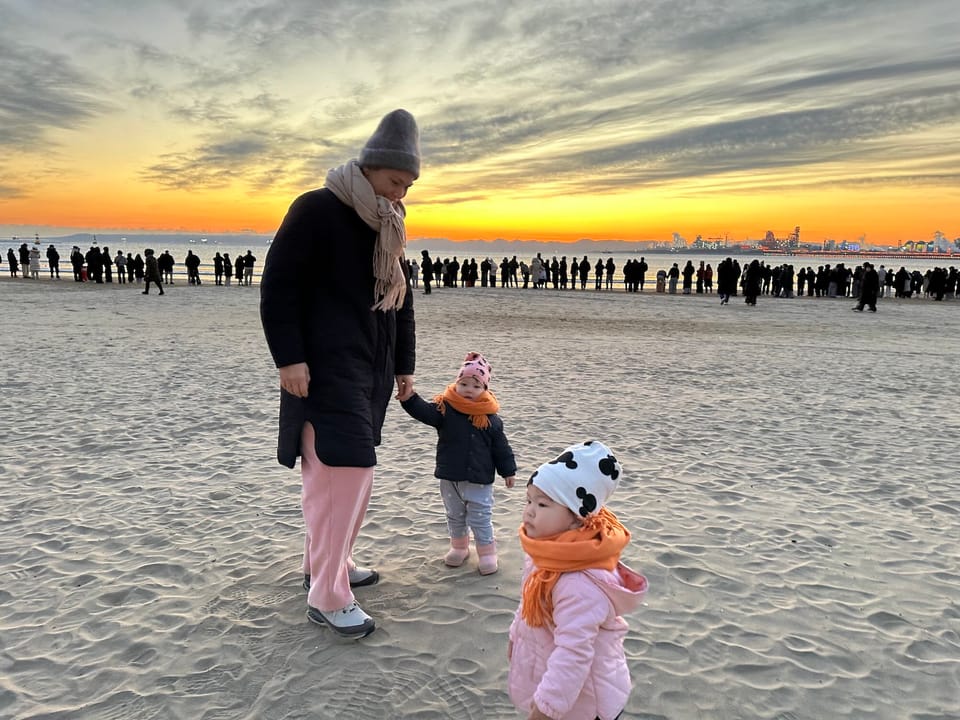
It happened on the last day of 2025.
Standing at the first light of 2026,
right in front of the apartment we had just signed, I felt it clearly.
Responsibility.
I’ve done this process many times for others.
But when it’s your own family,
your own name on the contract,
your body still feels the weight.
That weight wasn’t fear.
It was attention.
My place this time is jeonse.
Yours might be wolse.
That part doesn’t matter here.
What matters is this:
In Korea, a lease doesn’t become real all at once.
It hardens in stages.
Each stage is marked by money leaving your account.
Each one changes your legal and emotional position.
Cuz, you know what we do.
Let’s slow them down.
1. 계약금 (deposit downpayment)--the legal trigger
계약금 is paid right after signing the lease, often at the meeting itself.
(Broker fees are often settled around here too.)
계약금 is usually around 10% of the deposit.
(Any holding deposit already paid rolls into this.)
But the number is not the point.
Before this stage, people can already lose money.
Holding deposits (가계약금).
It hurts, but it’s the price of halting the market and walking away.
But 계약금 is different.
This is not symbolic money.
It’s real money and more importantly, it activates the law.
From this moment:
- the lease becomes enforceable on both sides
- symmetry is no longer optional, for either side
If you back out, you lose the 계약금 (far heavier than a holding deposit).
If the landlord backs out, they cannot avoid double compensation.
This is the first irreversible click.
Once the contract is signed and a certified lease date is issued, your money is no longer just transferred.
It is embedded.
Your claim becomes attached to the property itself.
Liquidation, in worst-case scenarios, is no longer hypothetical.
It becomes structurally possible.
That’s why the feeling changes immediately after sending it.
Nothing dramatic happens.
But something hardens.
2. 중도금 (mid-term payment)--crossing the Rubicon
중도금 is typically paid a few days to a week before move-in.
Often around 40%, but again, the percentage is not the lesson.
What changes here is not the amount.
It’s the legal position.
Before 중도금, exiting the lease is still framed as cancellation.
Painful, yes.
After 중도금, walking away is non-performance of an obligation (채무 불이행).
That distinction matters.
You are no longer saying,
“I changed my mind.”
The law hears,
“You failed to perform what you already committed to.”
From here:
- penalties are no longer capped by the 계약금
- claims for indemnity or reparation become possible
- disputes shift from exit costs to damages
This is the real Rubicon.
Many people emotionally register 계약금 as the big step.
Legally, 중도금 is heavier.
Because this is the moment where the lease is no longer reversible in practice.
From here, you either proceed or deal with the steep consequences.
3. 잔금 (final payment)--synchronized performance
잔금 is paid on move-in day, at the moment possession is handed over.
Legally, it’s not just a final balance payment.
It’s an act of performance.
At this stage, both sides already carry obligations.
The lease exists.
Responsibility is established.
What 잔금 does is complete the exchange.
Money moves out.
Possession moves in.
This is why 잔금 is treated differently from earlier payments.
It’s not about commitment anymore.
It’s about execution.
In legal terms, this moment is about simultaneous performance (동시이행).
If both sides perform together, the lease deal closes cleanly.
If one side performs and the other doesn’t, the issue is no longer commitment.
It’s breach.
That’s why 잔금 day feels tense even when everything is fine.
You’re releasing money and receiving possession--in sync.
Once 잔금 is paid and possession is taken:
- the lease becomes fully effective in practice
- your rights are no longer prospective
- disputes no longer undo the lease--they are resolved inside it
This is the final irreversible move.
After this point, the lease doesn’t harden anymore.
It simply exists.
A summer day that shows why this matters
I saw this play out one summer, on one of the hottest days of the year.
My wife’s friend, Christina, had her 잔금/move-in day scheduled.
The funds were coming from overseas family.
They were delayed.
A friend tried to help by lending the money temporarily.
That failed too--daily transfer limits at a Korean bank.
Christina stayed calm.
Too calm, maybe.
She arrived with her friends and moving boxes,
assuming the money would arrive soon.
The landlord’s agent refused to let her in.
So she waited outside the building, in the heat,
not sure what to do.
Then she called me urgently.
From her perspective, this didn’t feel serious.
The money was coming.
Maybe a day or two late.
In many countries, that’s normal.
But in Korea, 잔금 isn’t just timing.
It’s choreography.
That 잔금 was likely needed to return the previous tenant’s deposit, directly or indirectly, that same day.
And the agent would have been blamed for breaking the chain.
That’s why the agent refused to give the door password.
Not out of anger.
Out of fear.
잔금 is not about trust. (they all knew money was on the way.)
It’s about simultaneous performance.
Money and possession must move together, or the system breaks.
Heavy for Everyone--And That’s Natural
At each of these stages, it can feel like the pressure is only on you.
But in reality, everyone is exposed at the same time.
The tenant is risking real money.
The landlord is managing tight liquidity.
The agent is responsible for keeping the choreography intact.
In many leases, money doesn’t just move between two people.
It moves through them.
The 계약금 you send is often passed straight to the previous tenant, so they can secure their next place and put down their 계약금.
Your 중도금 is what gives the landlord enough liquidity to return the previous tenant’s deposit and retrieve the place without breaking the chain.
Most landlords don’t sit on piles of cash.
They manage timing tightly.
The weight you feel at each stage is attention.
And that attention is what keeps the timing sharp.
So when money arrives on schedule, it’s not just compliance.
It’s courtesy.
Everyone can breathe again.
So, cuz--you’re not anxious because you’re weak.
You’re anxious because your body knows you’re standing at a point where many people are exposed at once.
Now you know where that is.
--JK