If You Lived Here--Mangwon (망원)
"Mangwon--where Seoul remembers to breathe."
Hey cuz,
Mangwon is the kind of place you don’t seek out.
You just wander into it one afternoon, and something in the air tells you:
slow down.
On the map, it’s just a small pocket between the river and Hongdae--easy to overlook.
But on foot, it’s hard to miss the soft kind of aliveness here.
The smell of warm bread at 8am.
A florist trimming stems onto the sidewalk.
A fruit delivery cart squeaking through a narrow alley.
Mangwon doesn’t try to impress you.
It just lives quietly, warmly, steadily.
Cuz, if you lived here, your shoulders might drop without you realizing it.
But here’s the small twist:
the softness of the neighborhood doesn’t extend to the rental market.
Units move quickly.
The clean ones disappear before lunch.
The tired ones linger just long enough to confuse newcomers.
So let’s walk this place together.
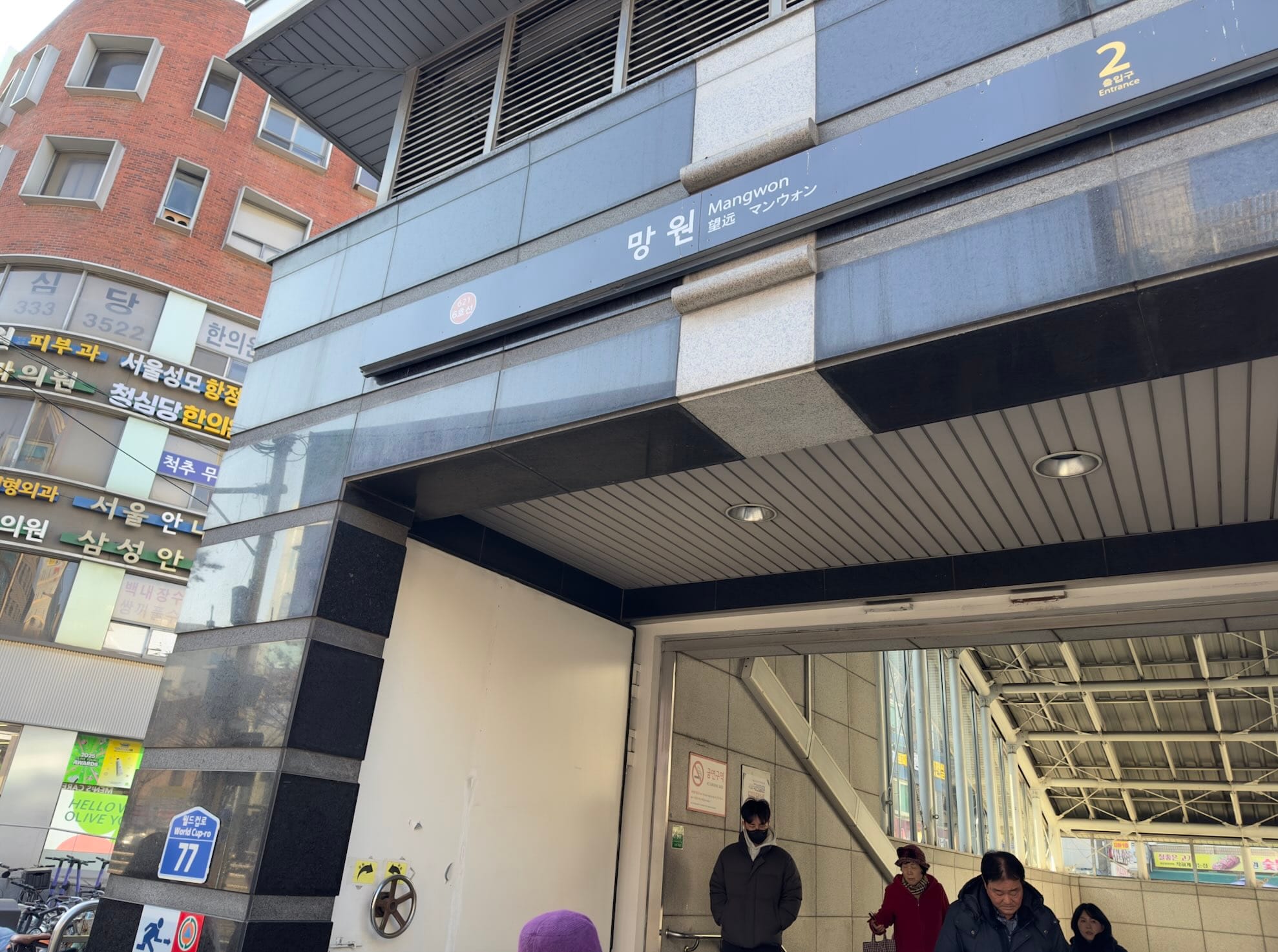
Mangwon at a Glance
Where it is:
Mapo-gu, Line 6 (brown), one stop from Hapjeong, five-minute walk to the river.
Who lives here:
Young Koreans, freelancers, local retirees, small families, dog parents.
Why expats like it:
Walkability, traditional markets, café culture, quiet nights, river access, a sense of community, and almost no high-rises.
Why some struggle:
Fast-moving inventory, older stock, aggressively priced small rooms.
Overall vibe:
A warm, traditional-market village stitched into the city grid. It sits close to Hapjeong and Hongdae, but lives at a slower pace.
Mangwon Energy Cluster Map
(Tap to open the map and explore how Mangwon’s energy shifts block by block)
Mangwon is administratively split into Mangwon-1-dong and Mangwon-2-dong.
Most of the cafés, markets, and visitor flow sit in Mangwon-1-dong.
Mangwon-2-dong, north of World Cup Market, feels more deeply residential--quieter streets, fewer destinations, more routines.
Mangwon is one of those neighborhoods where the density sneaks up on you. Block after block of low-rise buildings (빌라), older multi-family homes (다가구 주택), and single-family houses (단독주택), with only a handful of full-size apartment complexes (아파트 단지).
1) Station Cluster (Exit 2)
A mix of multi-family houses and newer low-rises as you drift toward Hapjeong. Units here carry a small premium for easy station access and steady foot traffic.
2) Market Cluster (surroundings of the markets)
The streets around Mangwon Market and World Cup Market, plus the alleys that spill out from them. Mostly older stock with a few new low-rises. Quirky layouts, tight lanes, and the occasional hidden gem that feels better in person than on paper.
3) Riverside Cluster (toward the bike path)
Calmer, softer energy. Fewer visitors, fewer delivery carts. A blend of older-stable buildings and a few new builds. Perfect for people who want Mangwon without the weekend buzz.
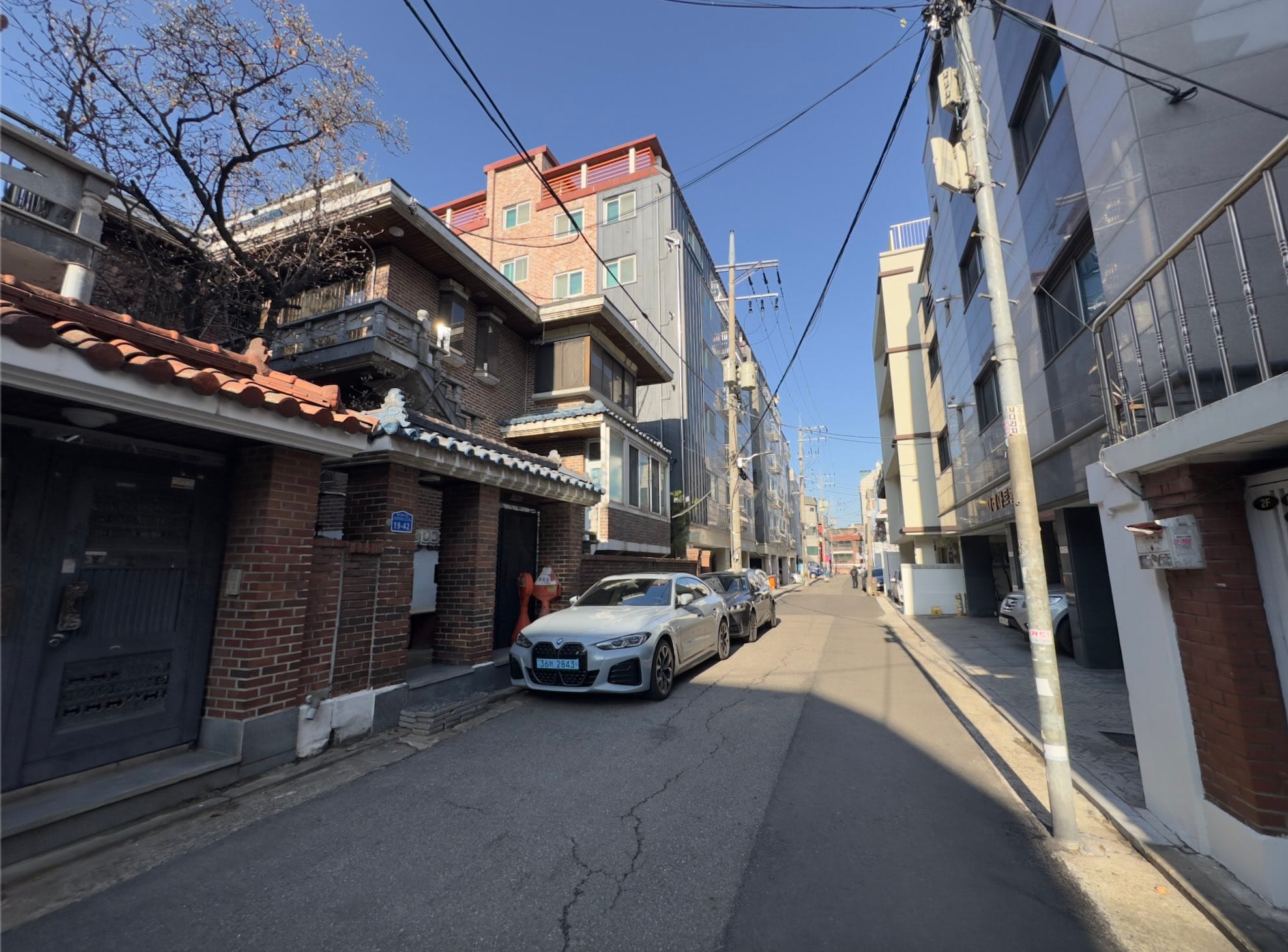
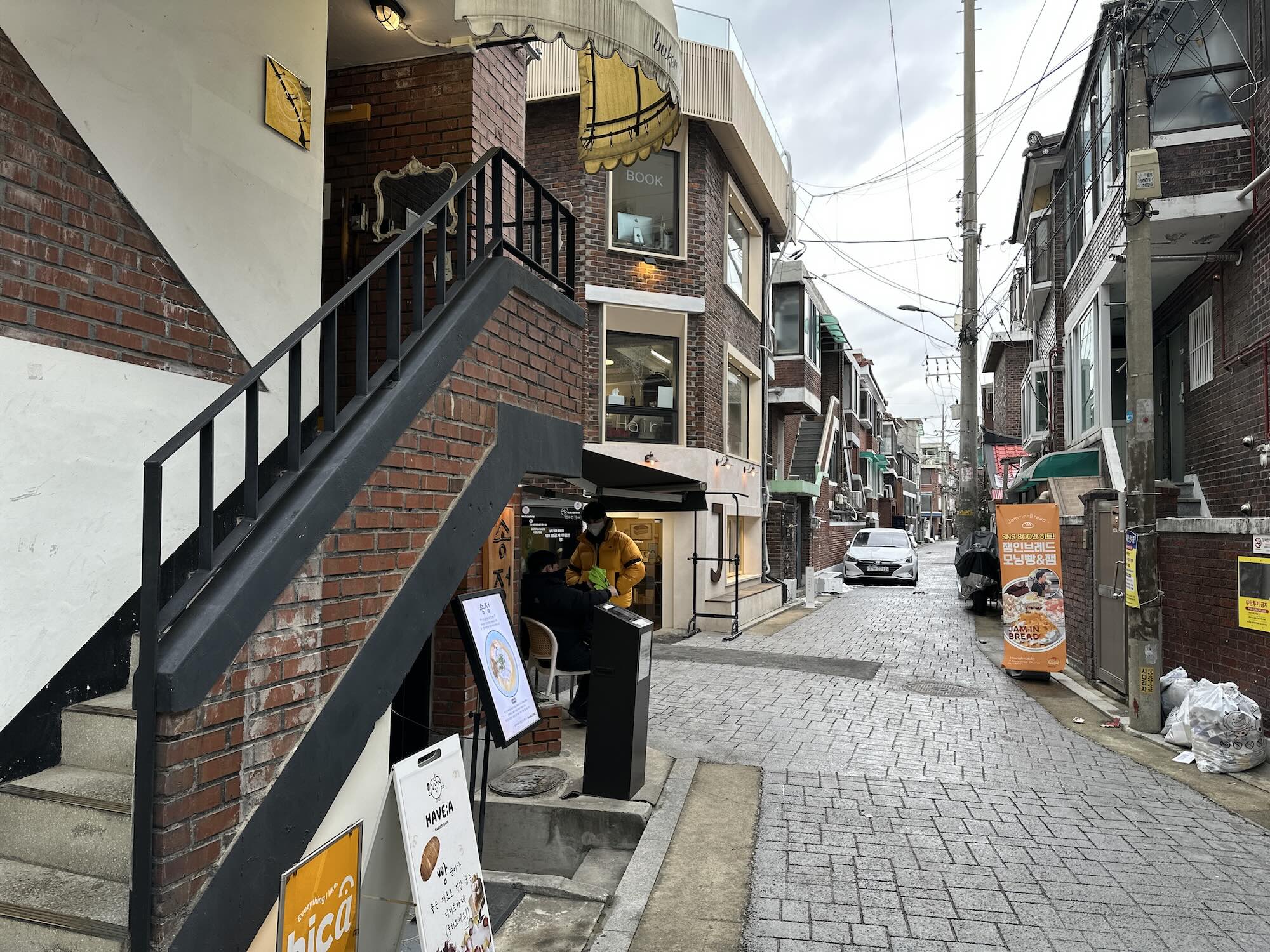
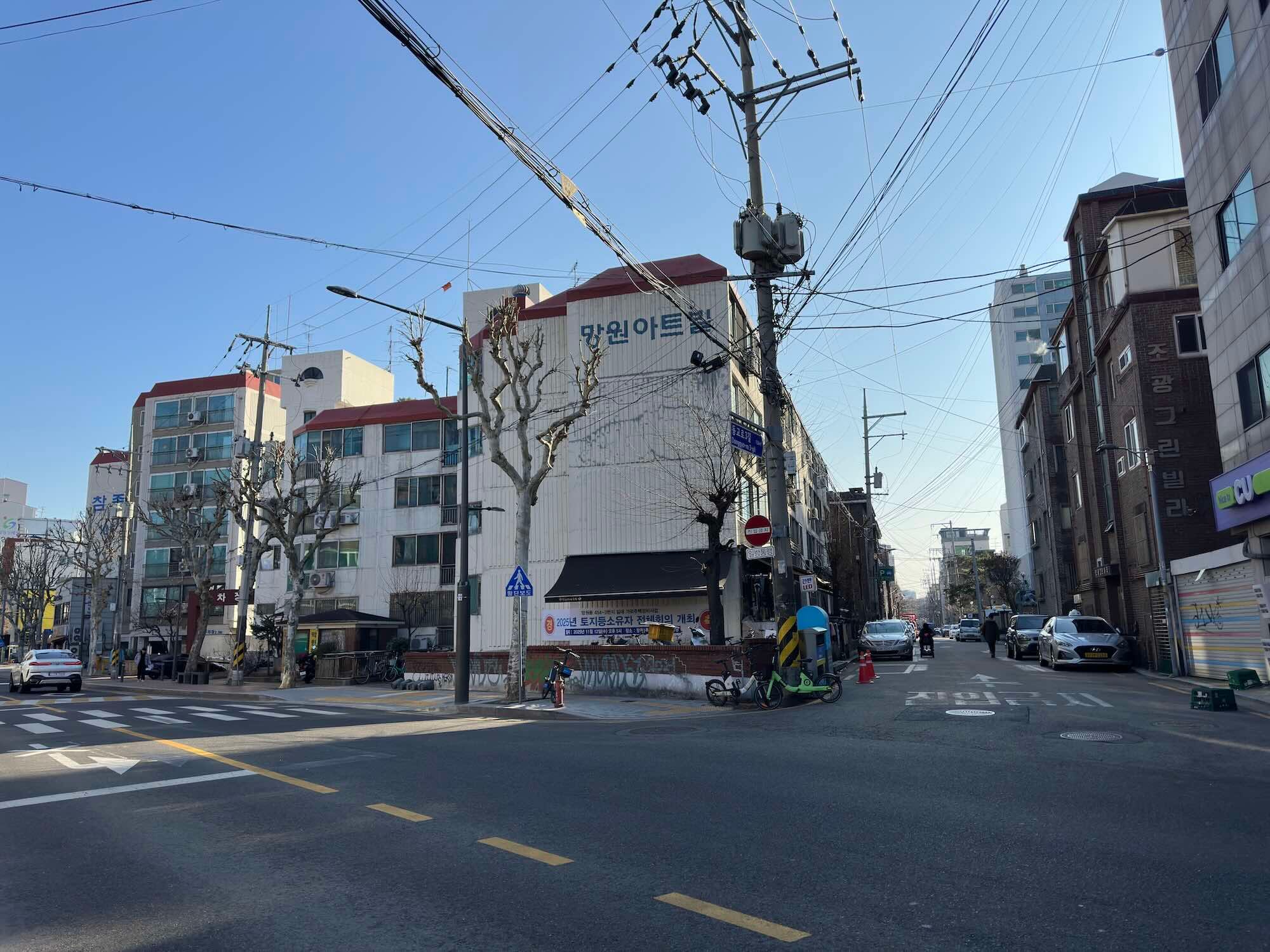
Three everyday Mangwon energies: station access, market life, and riverside calm.
A Walk I Recommend
Start at Exit 2.
Head toward the market, but stay on Worldcup-ro 13-gil.
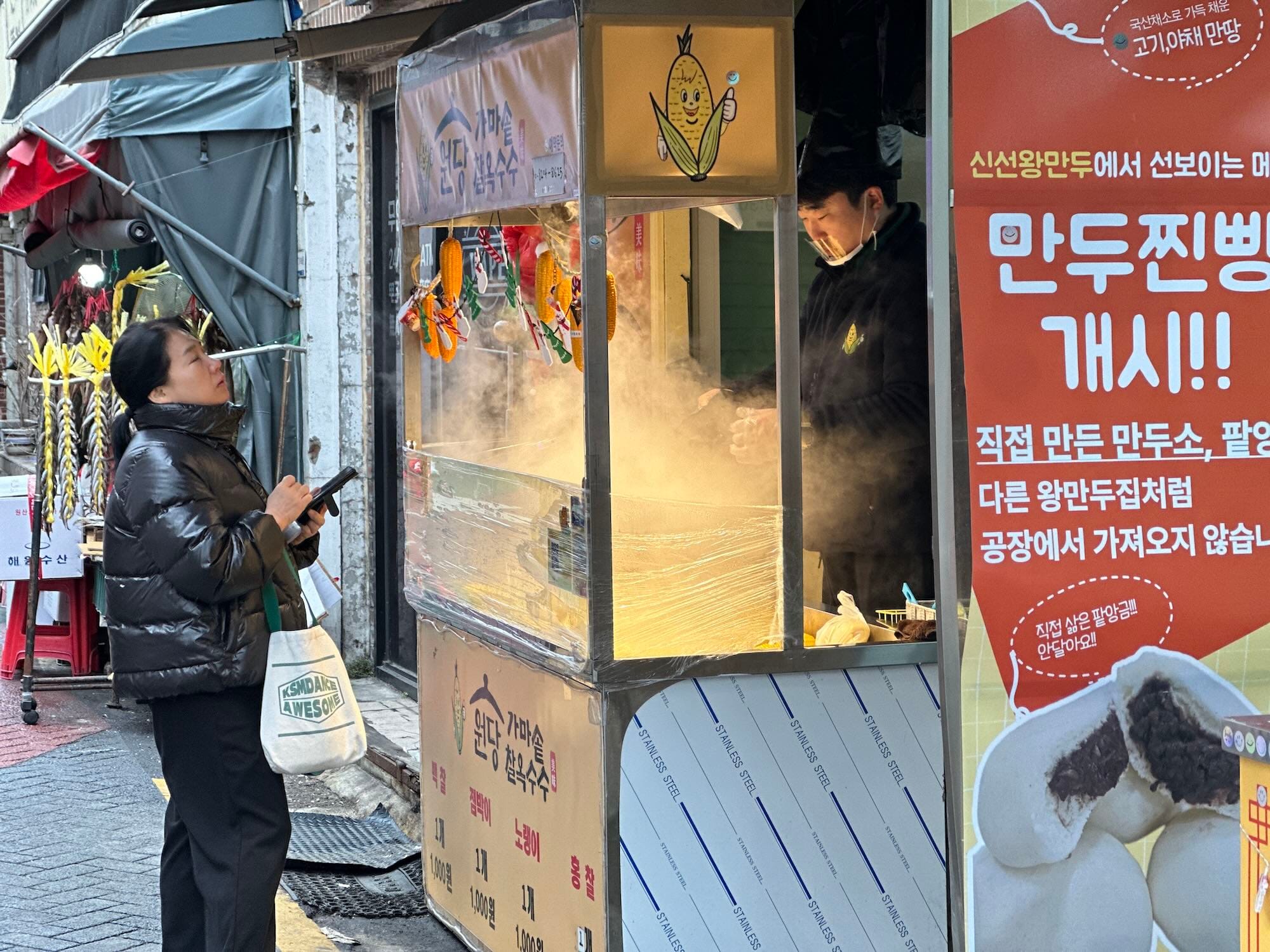
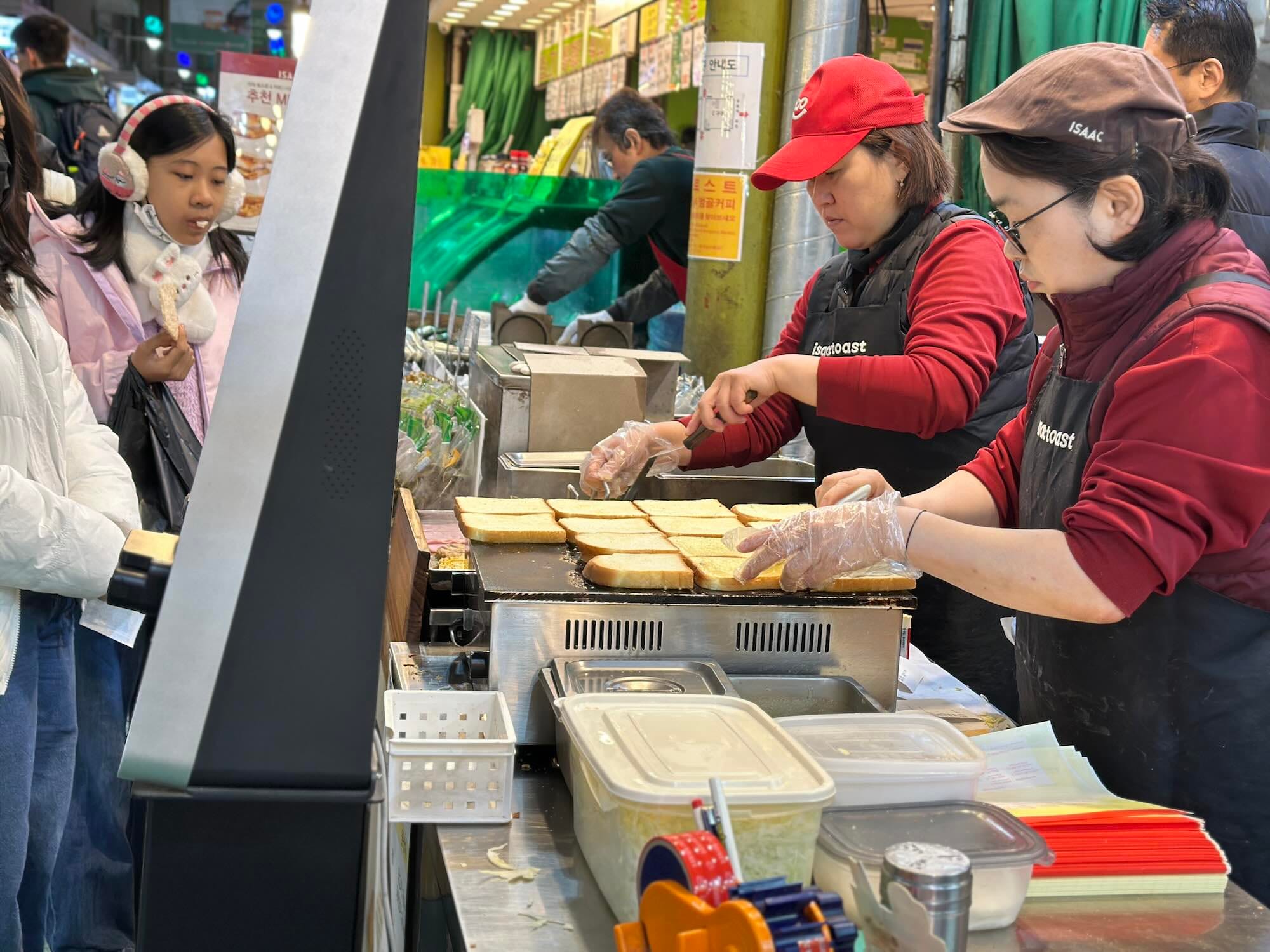
You’ll pass fruit shops, steamy dumpling joints, aunties flipping toast, small cafes, and a steady pulse of morning life. Young locals call this stretch Mangnidan-gil.
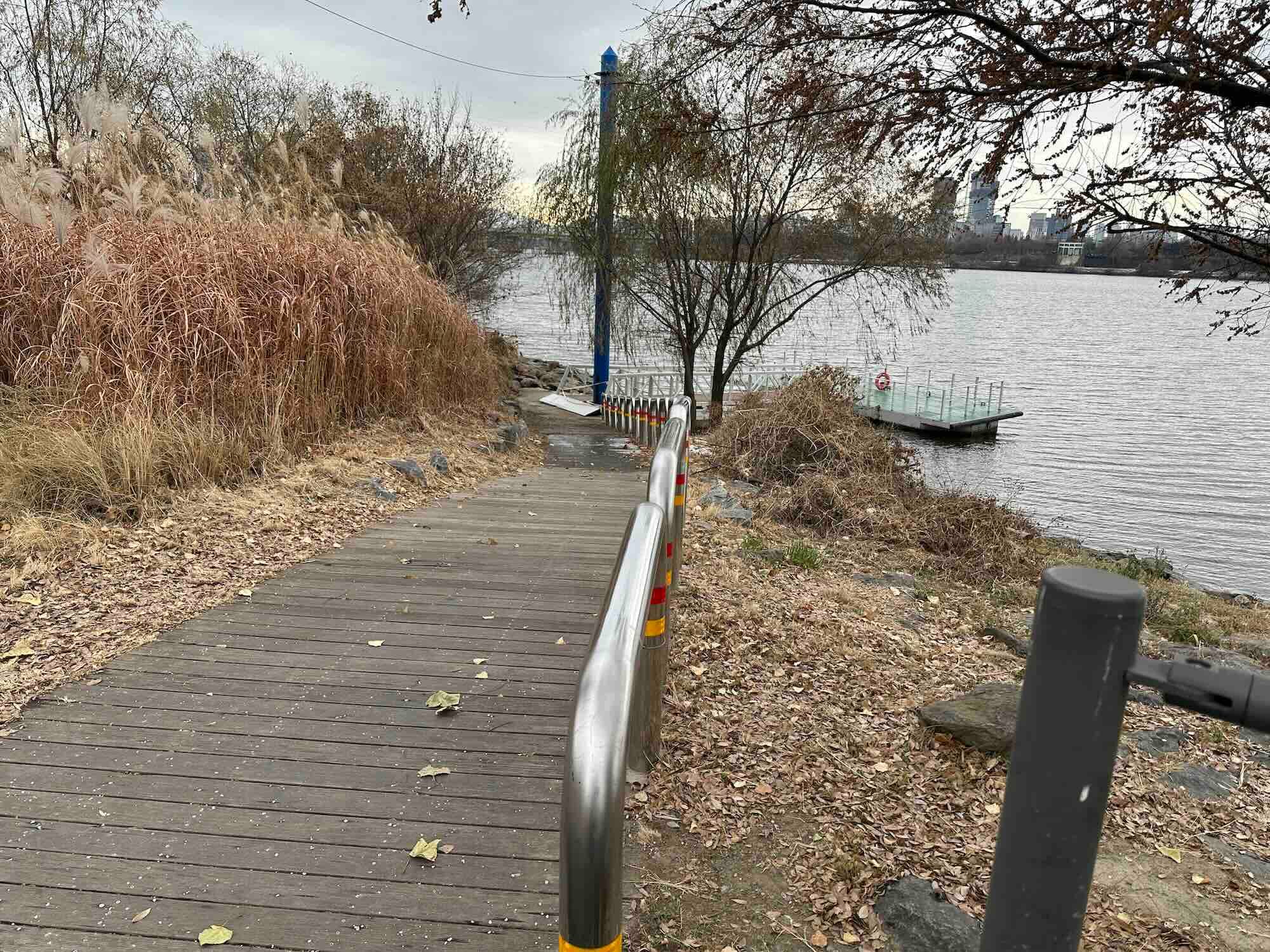
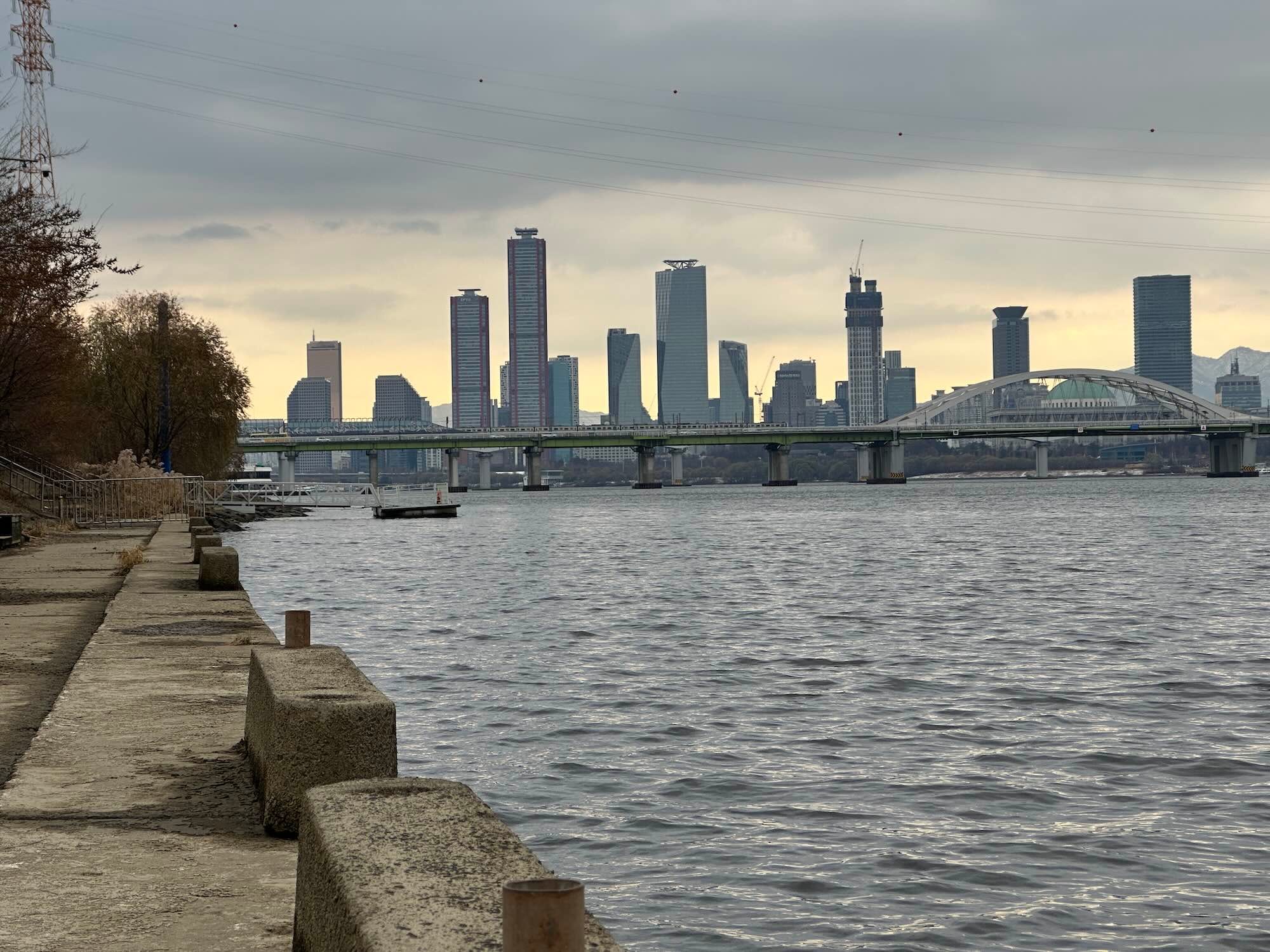
Keep drifting straight until the river access at Seongsan Nadulmok (성산나들목) opens in front of you.
It’s a gentle walk--the kind that clears your thoughts.
Or take Mangnidan-gil (Poeun-ro).
Move through the two traditional markets--Mangwon Market and Worldcup Market.
Then slip left toward the river through Mangwon Nadulmok (망원나들목).
If you don’t rush, the neighborhood reveals itself quietly.
Field Notes
- Mangwon Market runs 365 days; weekends get real lively with locals and visitors.
- Dawn delivery for market stalls. Avoid units facing main alleyways.
- Most listings here are mini one-rooms in multi-family homes (다가구). Approach deposits with caution (I’ll explain why in a future Letter).
- Most sit between 16–24㎡, with a few low-rise 1-bedrooms reaching 30–40㎡
- Many rooftop add-on units: hot in summer, cold in winter.
- Many semi-basement units: darker, more humid.
- The riverside park has multiple access points and plenty of amenities.
- Cafes and restaurants are small and often close earlier than other neighborhoods.
- Listings that sit too long usually have layout or neighbor issues.
- Online listings vary--some candid, some stale. Best verified in person.
Rental Snapshot--Winter 2025
(This snapshot reflects Mangwon’s Riverside Cluster. Other clusters differ slightly.)
Mangwon looks gentle, but the rental market runs on clear physics.
Most newcomers start in one-rooms (원룸) inside multi-unit houses (다가구):
the 16–22㎡ studios or studios with a tiny separate bedroom.
They usually sit around ₩10m deposit / ₩550k–750k rent.
They’re simple, everywhere, quick to secure, and perfectly fine for people who want a compact home.
If you prefer a little more breathing room, here’s a quiet truth:
Stepping into small low-rise apartment (빌라) territory often brings noticeably better space-to-cost balance.
The 28–40㎡ low-rises usually sit at ₩10–20m deposit / ₩850k–1m rent.
Yes--it’s more rent, but the space almost doubles, the noise drops, and the layouts open up. Often fairer per square meter.
A small Mangwon truth:
Raising the deposit doesn’t really lower rent here.
Most wolse rooms open around a ₩10M deposit.
And higher deposits simply unlock larger categories, not discounts.
Mangwon has almost no officetels, so the next tier above small low-rises is the full apartment category: rarer, family-sized (3bd/2ba or more), and usually ₩1.4–2.5m rent with big deposits.
If You Land Here Fresh Off the Plane
Cuz, don’t rush into a long lease in your first week.
Korea moves quickly, and good listings appear at random.
Safe temporary options in Mangwon:
- Goshiwon (₩450k–700k/month): simple, tiny, usually no deposit (₩0–100K).
- Airbnb (₩80k–150k/night): easy for a few days, but too pricey long-term.
- Weekly studios (₩270k–430k/week): furnished, quiet, practical.
- Month-to-month officetels (₩1m–1.4m): not in Mangwon proper, but available one stop over in Hapjeong or Seogyo.
Cousin’s Take
Great for: walkers, freelancers, dog parents, anyone who loves quiet nights, and students at Yonsei, Sogang, Ewha, Hongik, or Sookmyung who want a calmer home base away from the main campus crowds.
Hard for: nightlife lovers, people with lots of furniture, late shoppers.
Sweet spot renter: someone who values daily vibe more than square meters.
If you want a neighborhood that feels like a hug, Mangwon might be one of the warmest pockets in Seoul.
If you ever get stuck choosing in Mangwon, just reach out.
That’s what cousins are for.
--JK
cuz@cousinjk.com